Top 12 Christmas Markets in Europe: From Classics to Hidden Gems
If you love the holiday magic, then there is no better place to enjoy it than Europe. The Christmas markets in Europe are legendary and offer an unforgettable getaway you won’t soon forget. From centuries-old squares adorned with trees draped in festive lights to stalls filled with specialty food items and Christmas decorations, there is plenty of cheer to go around.
These days, you’ll probably find Christmas markets in many European cities (not just the capitals). But with so many options, where should you go? No worries, I got you. From the most well-known and popular to those that offer a great alternative, here is my list of the best Christmas markets in Europe.
Where did Christmas markets originate?
Christmas markets started in German-speaking parts of Europe during the Late Middle Ages. Back then, markets were the only place people could buy Christmas decorations and special holiday foods.
Today, they’ve spread across the continent, each region adding its own flavor. When we lived in Toronto, we lived around the corner from the Distillery District, where the Christmas market is held every year. It’s definitely an experience that very closely resembles those in Europe.
Why should you visit Christmas markets in Europe?
What makes them great to visit? Well, there is the food, and then there is the festive magic. These markets aren’t just about shopping. They’re about experience.
Whether you’re in a big city or a small mountain town, the setup is pretty much the same. A giant Christmas tree, festive music and friendly faces. The combination of flavours, culture and tradition mixed with festive vibes offers an opportunity to see European cities in a different way.

You’ll wander through rows of wooden huts selling handmade ornaments and local crafts. You’ll warm your hands on a mug of mulled wine. You’ll taste regional treats you won’t find anywhere else. And you’ll feel the genuine spirit of European Christmas traditions that go back hundreds of years.
The classic five European Christmas markets
These are the markets that appear on many travellers’ wish lists. They’re famous for good reason, attracting visitors from around the world year after year. This also means they are busier and more expensive than their less-hyped-up versions. Keep this in mind when planning your visit.
Nuremberg, Germany
- Dates: November 28 to December 24, 2025.
- Opening hours: From 10 a.m. to 9 p.m. (Christmas Eve until 2 p.m.).
- Location: Hauptmarkt (main square in the Old Town)
- More details: Visit the official website.
Although it was first mentioned in writing in 1678, the Christkindlesmarkt has roots that go back at least to 1530, making it one of the oldest Christmas markets in the world. More than 2 million people visit each year, and the market sets the standard that others try to match.
The opening ceremony alone draws thousands of spectators when the Christkind, a young woman dressed as an angel, recites a traditional prologue from the church balcony.

What to expect: Traditional wooden stalls with red and white striped roofs fill the medieval Hauptmarkt square in front of the Church of Our Lady. You’ll find traditional German Christmas decorations everywhere: nutcrackers, smoking figurines, Christmas pyramids and the unique prune people (zwetschgenmannle) that Nuremberg is known for.
The gingerbread here is legendary, so make sure not to skip it. Beyond the main market, there’s a separate Children’s Market on Hans-Sachs-Platz with hands-on activities like gingerbread decorating and candle-making, plus a carousel and a mini Ferris wheel.
Strasbourg, France
- Dates: November 26 to December 23, 2025.
- Opening hours: From 11:30 a.m. to 9 p.m. (Christmas Eve until 6 p.m.).
- Location: There are 8 markets spread throughout the historic centre.
- More details: Visit the official website or download the informational guidebook.
Known as the “Capital of Christmas,” Strasbourg has been hosting its market since 1570. That makes it one of the oldest in Europe (yes, you’ll hear that a lot about different markets).
The entire city goes all-in on Christmas, with multiple markets spread across different squares, each with its own character. About 2 million visitors come here each year to experience what many consider the most beautiful Christmas setting.

What to expect: Around 300 traditional market stalls spread across several locations in the city center. The main market, Christkindelsmärik, sits below the stunning Gothic cathedral. Just look for the massive Christmas tree on Place Kléber, which serves as the city’s festive centerpiece.
Here, you’ll find many hand-painted wooden decorations that are true works of art (and a great souvenir to bring home). The food leans French with an Alsatian twist: try the bredele cookies, tarte flambée and local wines along with the standard mulled wine. This blend of French and German traditions creates a unique atmosphere you won’t find elsewhere.
Prague, Czech Republic
- Dates: November 29, 2025 to January 6, 2026
- Opening hours: Daily from 10 a.m. to 10 p.m.
- Location: Old Town Square and Wenceslas Square, with additional smaller markets in other squares
- More details: Visit the official website
Prague looks like a fairytale year-round, but at Christmas it becomes something else entirely. The Old Town Square market has repeatedly won awards from CNN Travel and European Best Destinations as one of the best in the world.
Prague’s impressive architecture provides a stunning backdrop for the celebrations, and its central location makes it easy to combine with other European destinations.

What to expect: Two main markets anchor the festivities: Old Town Square and Wenceslas Square, both running daily and just a short walk apart. Old Town Square features a towering Christmas tree and a small petting zoo with sheep and goats for kids. There are about 80 wooden chalets selling everything from blown glass ornaments to traditional Czech foods.
Try the trdelník (chimney cake), but also sample heartier fare like Czech goulash and sausages. The astronomical clock and Church of Our Lady before Týn create a magical setting, especially at night when everything’s lit up.
Vienna, Austria
- Dates: November 14 to December 26, 2025
- Opening hours: Daily from 10 a.m. to 6:30 p.m.
- Location: City Hall (Rathausplatz), with additional ones at Schönbrunn Palace, Karlsplatz and the Belvedere Palace
- More details: Visit the official website
Vienna is another heavy hitter when it comes to the oldest Christmas markets in Europe. It has been hosting Christmas markets since the 13th century, so they know what they’re doing. You get the combination of imperial architecture, classical music heritage and genuine Austrian gemütlichkeit (coziness) that makes Vienna special any time of year.
The Viennese Dream Christmas Market (Wiener Christkindlmarkt) is the main attraction, and there are multiple themed markets throughout the city, each with its own personality.

What to expect: The market at Rathausplatz in front of City Hall is the biggest, with over 150 stalls and an ice skating rink. But don’t miss the romantic market at Schönbrunn Palace, where you can shop with a baroque palace as your backdrop.
The Spittelberg market in the 7th district offers a more traditional, local feel with narrow cobblestone streets. Expect high-quality crafts, beautiful glass ornaments and excellent food. The glühwein (mulled wine) in Vienna is some of the best you’ll taste. Traditional treats include roasted chestnuts, potato pancakes and kaiserschmarrn (shredded pancake).
Krakow, Poland
- Dates: November 28, 2025 to January 1, 2026
- Opening hours: 10 a.m. to 8 p.m. (10 p.m. on Friday/Saturday)
- Location: Main Market Square (Rynek Główny)
- More details: Visit the information website
The Christmas market tradition in Krakow dates back to the 13th century, making it also one of the oldest in Europe. The Main Market Square is one of the largest in Europe, and when filled with market stalls, it becomes one of the most beautiful Christmas settings on the continent.
The city’s medieval architecture and historic backdrop create an atmosphere that feels authentic rather than commercialized. Poland is one of Europe’s most affordable countries, so you can enjoy the full Christmas market experience without breaking the bank.

What to expect: Around 80-100 wooden huts fill the Rynek Główny (Main Market Square), surrounded by St. Mary’s Basilica with its famous trumpet call and the Renaissance Cloth Hall. The szopka krakowska (Krakow-style nativity scene) is included in UNESCO’s Intangible Cultural Heritage List.
Food is hearty and cheap: try pierogi (dumplings), kielbasa (sausages), oscypek (smoked cheese from the mountains) and potato pancakes. Mulled wine costs around 25 zloty (just under 6 euros), which is extremely reasonable compared to Western European markets.
A free Christmas train runs between Cathedral Square and Town Hall Square every 30 minutes, perfect if you’re visiting with kids. The market stays open later than many others, with food stalls often serving until midnight on busy nights.
Cologne, Germany
- Dates: November 17, 2025 to January 6, 2026 (varies by market)
- Opening hours: Weekdays from 11 a.m. to 9 p.m., weekends from 10 a.m. to 10 p.m.
- Location: Roncalliplatz next to Cologne Cathedral, with additional ones throughout the city
- More details: Visit the official website
Cologne hosts several different Christmas markets, making it the biggest Christmas market city in Europe. With over 4 million visitors each year, it’s also a very popular one.
The variety means you can find whatever atmosphere you’re after, from traditional to quirky. You should definitely start with the main market in front of the stunning Cologne Cathedral, a UNESCO World Heritage site with twin spires that dominate the skyline.

What to expect: The Cathedral Market features about 150 stalls with an 82-foot Christmas tree and live music. But the fun is hopping between markets. Heinzels Winter Fairytale in the Old Town features a gnome theme, playful decorations and an ice-skating rink. The Angels’ Market in Neumarkt features women dressed as angels and sophisticated artisan goods.
Each market has its own souvenir mug, making them a perfect souvenir to bring home. A mini Christmas train connects four of the markets if you don’t want to walk. Food ranges from traditional bratwurst to international options, and the glühwein flows freely.
Alternative Christas markets in Europe to check out
As the popularity of Christmas markets grows, more European cities join the festivities. You can easily explore the less-visited ones for that holiday vibe and experience. Here are five great alternatives to the most popular ones listed above, but keep in mind that there are plenty of other ones that might steal your heart.
Zagreb, Croatia
- Dates: November 29, 2025 to January 7, 2026
- Opening hours: From 10 a.m. to 10 p.m.
- Location: Ban Jelačić Square and throughout the city
- More details: Visit the official website
Zagreb is one of my favourite cities, and the festive vibes make it even more special. The Zagreb Advent Festival has won multiple “Best Christmas Market in Europe” awards from European Best Destinations. Considering it’s been around just over a decade, it’s quite the feat.
The Christmas market in Zagreb features a lot of festive music and art, with various indoor and outdoor concerts, displays and exhibitions. The prices are reasonable, the crowds are manageable, and the weather is slightly warmer than northern Europe while still feeling festive.

What to expect: The markets are spread across several locations in the city center, with the central hub at Ban Jelačić Square. You’ll find Croatian crafts, traditional foods, and a giant Ferris wheel called the Zagreb Eye, which offers panoramic views.
Try the strukli (a pastry with cheese filling) and sample rakija (fruit brandy) alongside mulled wine. The city is decorated extensively, with lights strung along streets and across buildings. There is also the “Fuliranje” (Fooling Around) market, where people get together to dance and celebrate in the streets. Live music performances happen daily.
Tallinn, Estonia
- Dates: November 21 to December 28, 2025
- Opening hours: From 10 a.m. to 8 p.m.
- Location: Town Hall Square
- More details: Visit the official website
Tallinn’s medieval Old Town has been attracting a lot of attention lately from cultural travellers seeking that storybook vibe. It is all that, and deserves all the hype. However, at Christmas, it becomes even more magical, so if you’ve been planning on visiting Estonia, you have another reason to do so.

The market is located in Town Hall Square, where you’ll find Tallinn’s iconic 15th-century architecture. Prices are affordable compared to Western Europe, the crowds are manageable, and you get genuine Baltic Christmas traditions that feel different from the German-style markets.
What to expect: The main market in Town Hall Square is filled with wooden huts selling Estonian crafts, including beautiful hand-made wool products. The food scene features local specialties like blood sausage (verivorst), sauerkraut and gingerbread, alongside the standard market fare. Hot drinks include glögi (Nordic mulled wine) and honey beer.
Wrocław, Poland
- Dates: November 21, 2025 to January 7, 2026
- Opening hours: From 10 a.m. to 9 p.m.
- Location: Market Square (Rynek) and Plac Solny
- More details: Visit the official website
Poland is another country that got into the Christmas market game over the past couple of decades, with Christmas markets popping up in major cities. The Wrocław Christmas market is incredibly affordable compared to other popular markets.
The beautiful main square (Rynek) provides a stunning setting with colorful baroque buildings, and the market has a genuine local character rather than feeling overly commercialized.

What to expect: Over 200 wooden huts fill the Rynek and surrounding streets, selling Polish crafts, decorations and food. You’ll find traditional pottery, hand-carved wooden items and beautiful ornaments. There’s usually an ice skating rink, and the whole square gets decorated with elaborate lights.
The food is hearty and delicious: try pierogi (dumplings), oscypek (smoked cheese), grilled sausages and potato pancakes. Grzane wino (mulled wine) costs a fraction of what you’d pay in Germany.
Trento, Italy
- Dates: November 21, 2025 to January 6, 2026
- Opening hours: From 10 a.m. to 8 p.m. (earlier closures on December 24, 25 and 31)
- Location: Piazza Fiera and Piazza Mostra
- More details: Visit the official website
Trento sits at the crossroads of Italian and Austrian culture, creating a unique blend of Christmas traditions. The market has grown significantly since its debut in 1993, now drawing visitors from across northern Italy and Austria.
If you like your Christmas markets set against the backdrop of mountain views, you’ll love Trento. With the views of the Italian Alps and Dolomites, the market is less crowded than the famous German markets but delivers the same quality experience with an Italian twist.

What to expect: Over 100 exhibitors spread across Piazza Fiera and Piazza Cesare Battisti, selling handicrafts, nativity scenes, Christmas decorations and local products from Trentino and South Tyrol.
The food scene showcases the best of both Italian and Austrian traditions: try tortel de patate (potato cake), knödel (dumplings), cevap from Valle dei Mocheni and pastries. Wash it down with vin brulé (mulled wine) or parampampoli (a grappa-based hot drink). Some years feature ice skating rinks and special attractions.
Craiova, Romania
- Dates: November 15, 2025 to January 5, 2026
- Opening hours: Not specified
- Location: Piata Mihai Viteazul Square
- More details: Visit the information website
If you didn’t have Romania on your list of Christmas market destinations, you need to fix that stat. Craiova has been named the Best Christmas Market for 2026 by European Best Destinations. It’s also considered the best in Romania, so it’s definitely worth checking out.
The market is one of the largest Christmas events in Europe. Despite its massive size, it maintains a cozy feel without overwhelming crowds. Prices are reasonable, and you’ll experience authentic Romanian holiday traditions that feel entirely different from the typical German-style markets.

What to expect: The market spans multiple themed zones across the city center. Unlike the previous years, this year’s theme is The Nutcracker. You can expect toy sculptures, giant ornaments and thematic sweets lit up with sparkling lights.
You’ll find the tallest flying sleigh in Southeast Europe, the largest Ferris wheel in Romania and an ice skating rink. You can buy crafts and gifts from local artists, and partake in creative workshops and concerts.
Food represents a multicultural mix from across Eastern Europe, including options from Azerbaijan, Armenia, Georgia, Greece, North Macedonia, Hungary, Ukraine, Turkey, Moldova, Bulgaria and Serbia. Try traditional Romanian treats like cozonac (sweet bread), sarmale (cabbage rolls), and kurtos kalacs (chimney cake), along with mulled wine and hot honey wine.
Vilnius, Lithuania
- Dates: November 29 to December 29, 2025
- Opening hours: noon to 8 p.m. (10 p.m. on Friday/Saturday)
- Location: Cathedral Square
- More details: Visit the information website
Every year, the Vilnius Christmas tree has a unique design that is different from previous ones, so you will never see the same one twice. The market, named the European Christmas Capital 2025, is smaller and cozier than the famous German markets, so you get a genuine Christmas spirit without the overwhelming tourist crowds.
You won’t find thousands of tourists (although it gets busier with each year) as you make your way through the market. Prices are affordable, and you’ll experience Baltic Christmas traditions that feel completely different from Central European markets.
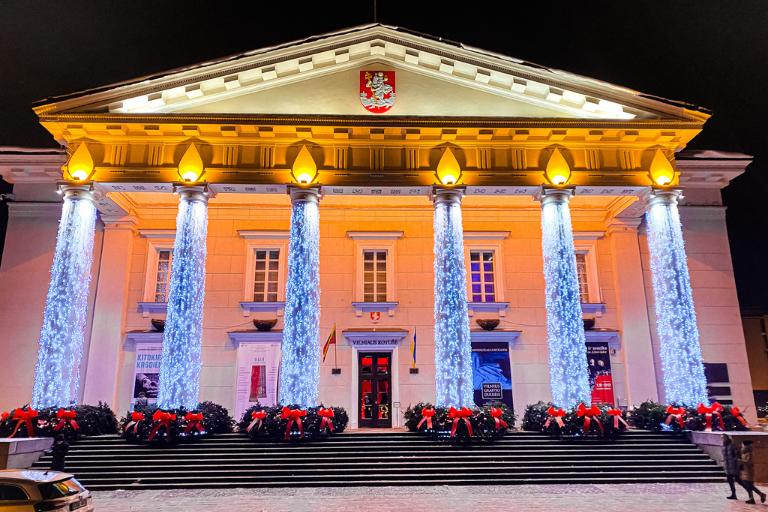
What to expect: The main market sits in Cathedral Square around the famous Christmas tree, with about 40 wooden huts offering artisan goods and seasonal treats. Additional smaller markets pop up at Town Hall Square and other locations throughout the Old Town.
You’ll find native amber jewelry, handmade wooden toys and household goods, nutcracker soldiers, Lithuanian fruit teas, brightly colored candies and gingerbread. Traditional foods include kibinai (meat-filled pastries) and šakotis, a delicious spit-cake made from butter, eggs, flour, sugar and cream that’s a Lithuanian festive favorite. Try kūčiukai, small poppy-seeded dough balls traditionally eaten with cranberry juice.

A free Christmas train runs between Cathedral Square and Town Hall Square every 30 minutes, playing Lithuanian Christmas carols. Vilnius Old Town is always festive, and it feels magical. An ice skating rink opens at Town Hall Square in late December. The whole city center is compact and walkable, so you can easily visit all the Christmas locations on foot.
Tips for visiting Christmas markets
- Dress in layers with warm, waterproof gear. Comfortable and waterproof shoes are a must. You’ll be standing outside for hours, often in freezing temperatures. Bring wool socks, a thick scarf and gloves. Your coat should be rated for below-freezing weather, not just a lightweight jacket.
- Bring cash in the local currency. While many vendors accept credit cards, especially food vendors, almost all require cash. You’ll also need small change for mug deposits and toilets.
- Visit on weekdays, ideally in the late afternoon. Late afternoon into early evening on a weekday can be the ideal sweet spot: pleasantly bustling but not overwhelming. Weekends draw massive crowds of locals and tourists alike.
- Pack a collapsible shopping bag. Bring an extra shopping bag or two in case browsing turns into a shopping excursion. You’ll find hand-carved ornaments, local crafts and regional specialties you won’t want to leave behind.
- Keep valuables close to your body. Use a crossbody bag or secure it in pockets for your cash, cards, and phone. Don’t carry a large purse that can tempt pickpockets.
- Save your souvenir mugs. When you buy mulled wine, you’ll pay a deposit (usually 2-4 euros) for the mug. Return it for a refund, or keep it as a collectible. Many markets feature different mug designs each year, making them a unique souvenir.
Which Christmas markets should you visit?
When it comes to Christmas markets in Europe, the choices are endless. I feel like each new season brings another round of markets and festivities to enjoy. December is a great time to visit Europe, especially if you love the holidays and all that comes with the season.
The best way to visit Christmas markets is to visit a few cities in one country or neighbouring countries. Depending on how many days you have, I would stick to three to five markets on one trip. They can become overwhelming, which will zap that cheer right out of the experience.