12 Best Museums in Paris for Art Lovers
Paris is one of my favourite cities to explore for many reasons, and one of the top ones is the number of great museums and galleries. Whether you want to learn more about the history of Paris or see the works of famous artists, the City of Light has it all. With over 130 museums in Paris, the is something for everyone to enjoy.
The French capital is a popular destination for history buffs and art lovers, but it’s also a great place for fashionistas, foodies and architecture aficionados. Whether you explore one of the top museums, catch a cabaret show at the iconic Moulin Rouge or a performance at the Opera Garnier, you’ll spend a lot of time immersing yourself in French history.
Best Paris museums for art lovers
Choosing the best art museums in Paris is like picking just one chocolate from an entire chocolate shop. There is no denying that all of the museums in Paris offer outstanding collections of art, history, and culture from France and the world.
However, it’s also important to note that there are many types of museums in Paris, so if you’re visiting for the first time, you might want to start with the famous ones and then move on to others. Here is a list of the most visited museums in Paris to get you started.
Musée du Louvre (The Louvre Museum)
The Louvre is probably the most famous museum in Paris and one of the world’s most visited. Each year, more than 10 million visitors explore the priceless collections housed in equally magnificent buildings. With over 782,000 square feet (over 72,000 m2), the Louvre Museum has one of the world’s largest art collections.
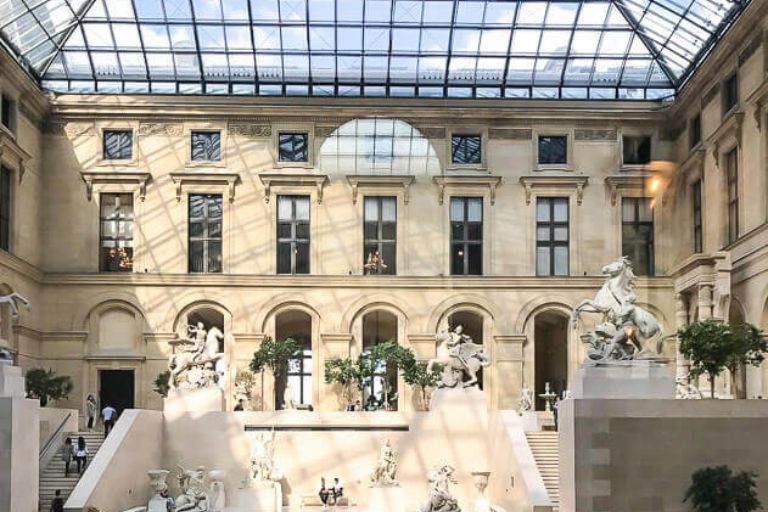
The Louvre dates back to the late 12th century, when King Philip II commissioned a garrison fortress to protect and watch over the city. Over the years, it underwent numerous changes and additions, with the royals moving their official residence out of the city. During the 16th century, it once again became the official residence of the kings of France.

Subsequently, it became the formidable complex we see today. Inside are priceless paintings by Italian, Dutch and French masters, including Leonardo da Vinci’s Mona Lisa. Inside, you can also admire ancient sculptures and precious art objects, including jewellery and textiles from all over the world. I’m not gonna lie, the Louvre truly is one of the best Paris museums and my happy place.
Musée d’Orsay
Musée d’Orsay has an extensive collection of 19th-century Impressionist and post-Impressionist art from artists like Vincent Van Gogh, Paul Gauguin, Paul Cézanne, Édouard Manet, Claude Monet, Berthe Morisot and Pierre-Auguste Renoir. The other is the incredible buildings it’s housed in.
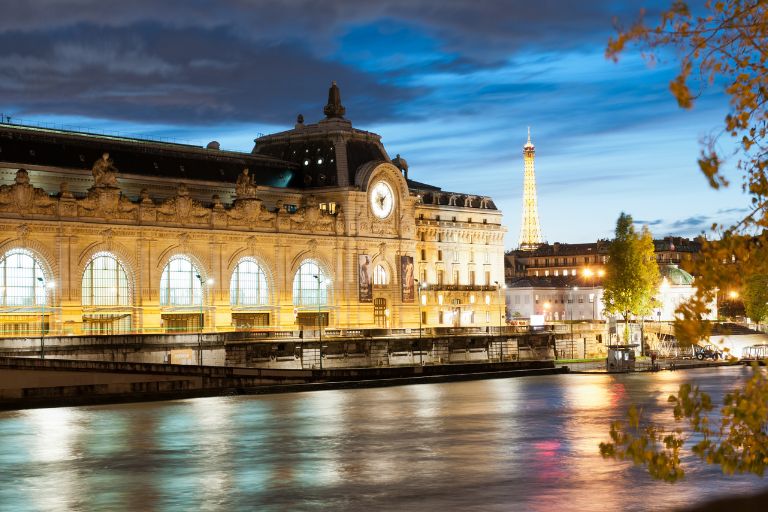
Located on the Left Bank of the Seine River is a former railway station, the Gare d’Orsay. Built for the 1900 Exposition Universelle, it was the railway terminal until 1939. Before officially becoming a museum in 1986, it served as a mailing station during the war and, subsequently, a movie set. It narrowly escaped demolition, and today the Musée d’Orsay is one of the largest art museums in Europe. Over three million visitors come here every year to view over 2,000 paintings, 600 sculptures and other works.
Love reading about the best Paris museums? Then you’ll love the slideshow about how the Musée d’Orsay became a museum.
Musée de l’Orangerie
Musée de l’Orangerie started as a winter shelter for the orange trees in the Tuileries Palace at the request of Emperor Napoleon III. What became a fancy greenhouse in 1852 was used to store orange trees and as an event venue until 1922.
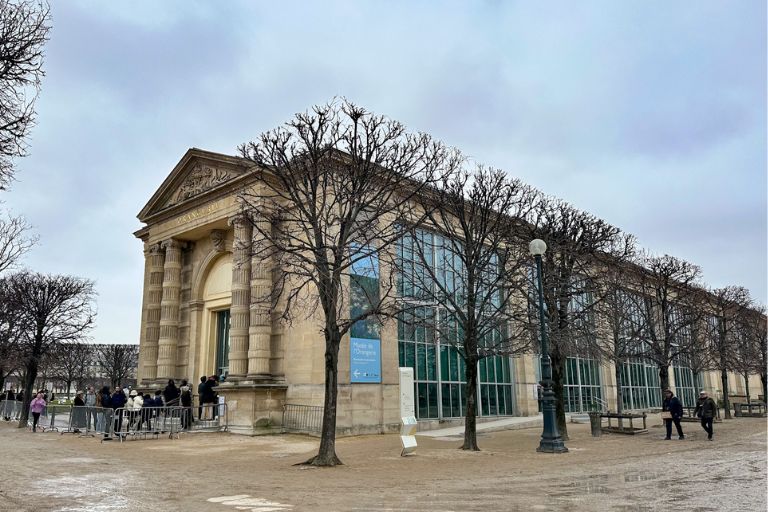
Today, it contains an extensive collection of Impressionist and Post-Impressionist paintings. Here, you’ll find a room dedicated to Monet’s Water Lilies and works by Paul Cézanne, Henri Matisse, Amadeo Modigliani, Pablo Picasso, Pierre-Auguste Renoir and Henri Rousseau. Many of these paintings and artworks were curated by the French art dealer Paul Guillaume.
Musée Picasso
I’d say some of the best Paris museums are those dedicated to the works of the many incredible artists who lived here at some point or another. One of the many who put Paris on the map was Pablo Picasso. Located in the Hôtel Salé, the Picasso Museum (full name Musée National Picasso-Paris) is dedicated to the genius of Pablo Picasso. Here, you’ll find a collection of over 5,000 pieces ranging from paintings, sculptures and books to ceramics and numerous archival items, including manuscripts and personal letters.

Before going in, I knew Picasso was a famous painter whom I had studied in school. While some of his work was interesting, I wasn’t necessarily a huge fan. However, I was impressed by how creative and versatile an artist Picasso was. Seeing his paintings and sculptures opened up an appreciation for the artist and his art that I didn’t know was in me. Even if you’re not a huge Picasso fan, I will encourage you to step into his world, even if just for a few hours.
Le Petit Palais
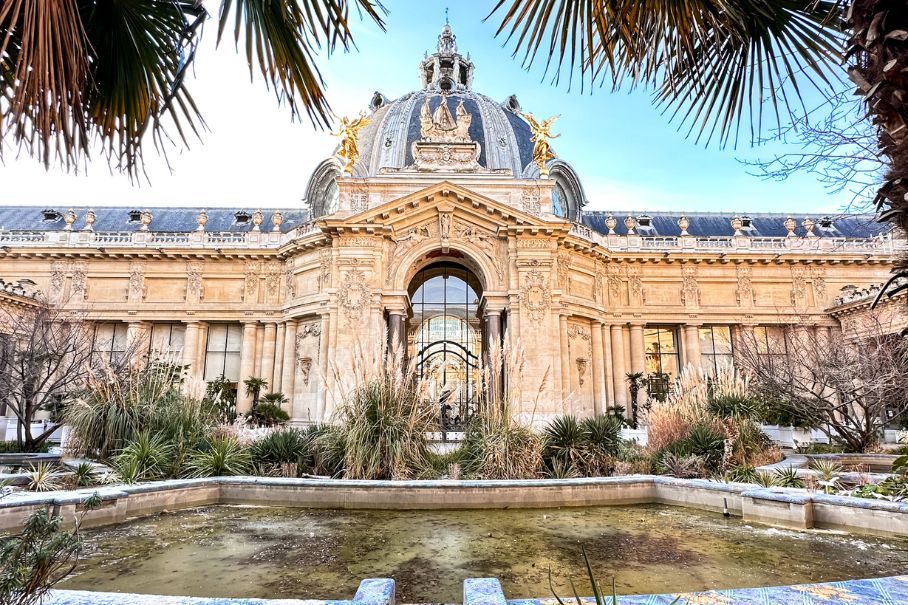
The Petit Palais, much like the nearby Grand Palais, was built for the 1900 Universal Exhibition and became a museum in 1902. Known as the Musée des Beaux-Arts de la Ville de Paris or the Museum of Fine Arts of the city of Paris, it’s also a stunning example of Beaux-Arts style with some Art Nouveau features.
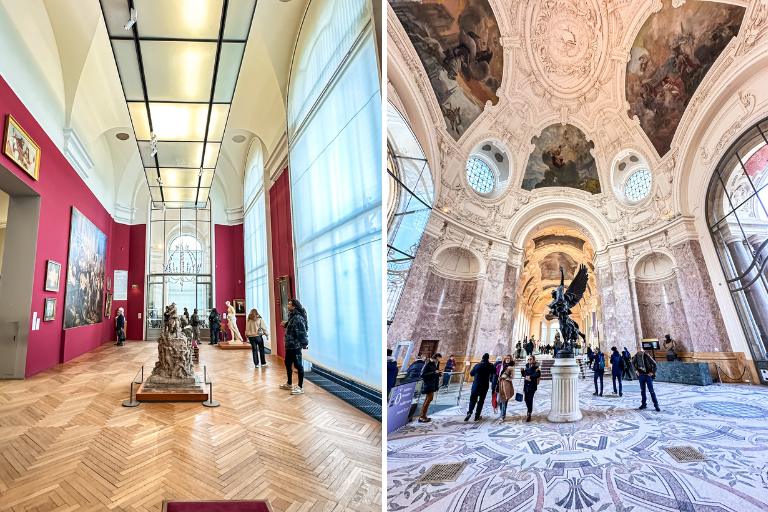
The building is shaped like a trapezium with four wings around a semi-circular garden. It blends traditional and modern architectural styles, offering the grandeur of a palace befitting Paris and its art.
PRO TIP: Admission to the permanent collection is free, but you have to buy a ticket for any temporary exhibitions.

The museum houses collections of paintings and furniture from the Medieval and Renaissance periods through the 18th century. If you love art by the French and Dutch masters, you’ll enjoy the works of Cézanne, Poussin, Monet, Rodin, Rembrandt and Rubens.
Musée Rodin
The Rodin Museum houses the works of the French sculptor Auguste Rodin. The museum is housed in the Hôtel Biron, a grand 18th-century mansion surrounded by a beautiful garden, which serves as an ideal backdrop for Rodin’s sculptures. It offers a serene and contemplative space where visitors can appreciate Rodin’s art in a tranquil setting.

Here, you can see a comprehensive collection of Rodin’s works, including some of his most famous sculptures, such as The Thinker, The Kiss, and The Gates of Hell. These iconic pieces showcase Rodin’s mastery of sculptural techniques and ability to capture the human form with remarkable depth and emotion.
In addition to Rodin’s sculptures, the museum houses a significant collection of his drawings, prints, and other works of art. There are also temporary exhibitions that explore various aspects of Rodin’s life and artistic practice, as well as related themes in art history.
Musée Marmottan Monet
The Musée Marmottan Monet is another prominent museum in Paris, renowned for its extensive collection of works by the Impressionist painter Claude Monet and other notable artists. It’s located in a beautiful mansion once owned by Paul Marmottan, a French collector of Napoleonic art and a prominent art historian.
Upon his death, Marmottan bequeathed his home and collection to the Académie des Beaux-Arts, stipulating that it be turned into a museum. Over the years, the museum’s collection has expanded significantly through donations and acquisitions.
PRO Tip: Get the 2-, 4-, or 6-day Paris Museum Pass to make the most of your visit.
In addition to Monet’s works, the museum also houses a notable collection of paintings by other Impressionist and post-Impressionist artists, including Berthe Morisot, Edgar Degas, Pierre-Auguste Renoir, and Camille Pissarro, among others.
Musée de Cluny
Also known as the Cluny Museum – National Museum of the Middle Ages, it’s located in the Latin Quarter of Paris, France. It is housed in the Hôtel de Cluny, a historic mansion built in the late 15th century. The museum’s building is also a significant historical landmark, featuring a mix of medieval and Renaissance architecture and remnants of Roman baths that date back to antiquity.

The museum showcases art and artifacts from the Middle Ages, spanning the 6th to the 16th centuries. It houses an extensive collection of medieval sculptures, tapestries, manuscripts, stained glass, metalwork, and other artifacts, providing visitors with a comprehensive view of medieval life and culture.
One of the museum’s highlights is the famous “Lady and the Unicorn” tapestries, a series of six tapestries considered masterpieces of medieval art. These tapestries are renowned for their intricate design and symbolism, depicting a lady accompanied by a unicorn and other animals and motifs.
Musée d’Art et d’Histoire du Judaïsme
Musée d’Art et d’Histoire du Judaïsme (Museum of the Art and History of Judaism), also known as mahJ, is the largest Jewish museum dedicated to art and history. Housed in the gorgeous 17th-century mansion Hôtel de Saint-Aignan, the museum retraces the history of the Jewish people of France, Europe and North Africa.
Here, you’ll find a collection of 12,000 pieces, comprising archives, manuscripts, religious objects, ceremonial dress, art, and medieval gravestones from the Middle Ages to the 20th century. The museum has an extensive collection of works by Marc Chagall and Amedeo Modigliani.
Musée du quai Branly – Jacques Chirac
Musée du quai Branly – Jacques Chirac is dedicated to indigenous art and cultures of Africa, the Near East, Asia, Oceania and the Americas. The collections include over 370,00 art objects, 700,000 iconographical pieces and more than 200,000 reference works from the Neolithic period to the 20th century.
Many of the pieces were originally part of private collections that accumulated during colonial expansion. These private cabinets of curiosities included natural history specimens, historical and archaeological pieces and art. During the 18th century and following the French Revolution, specialized museums were created to showcase and preserve these collections.
Musée Cognacq-Jay
Musée Cognacq-Jay originated as a private collection of Ernest Cognacq and his wife, Marie-Louise Jay. Upon his death in 1928, Ernest donated his collection of 18th-century art to the city. Here you’ll find over 1,200 items, including paintings, ceramics and jewellery accumulated between 1900 and 1927.

The collection focuses on the Age of Enlightenment and provides an insight into French art and society during the 18th century. This collection was housed in other places before being transferred to its current location in 1990. The museum is free and is a great opportunity to admire artists like Rembrandt, Paul Cézanne and Edgar Degas.
Musée Cernuschi
Musée Cernuschi is a museum of Asian art with extensive collections from China, Korea and Japan. It represents the vision and personal collections of Henri Cernuschi, an Italian patriot in exile in France. He amassed over 5,000 works of art that formed the core of his collection.
Get the most out of your Paris visit with the official Paris City Pass
Henri built a private mansion to house his collection and left both to the city upon his death. The museum opened in 1898 and hosted numerous exhibitions focusing on art from China and Japan. Additional artworks were added over the years with discoveries in Asia. The collection today includes over 12,000 items obtained through numerous acquisitions and significant donations.
Further thoughts on the best Paris museums for art lovers
When it comes to picking the best museums in Paris, the choices are extensive. Those who love art will find it everywhere, as most Paris museums are endless treasure troves of priceless art. Architecture lovers can also admire the artful buildings that house these museums.
Paris has been a leading centre of European culture for centuries, so it’s not surprising to see such a grand amassment of priceless art here. Ultimately, only you can decide what the best Paris museums are for you. This list will get you started on your artful treasure hunt. Enjoy the adventure.